

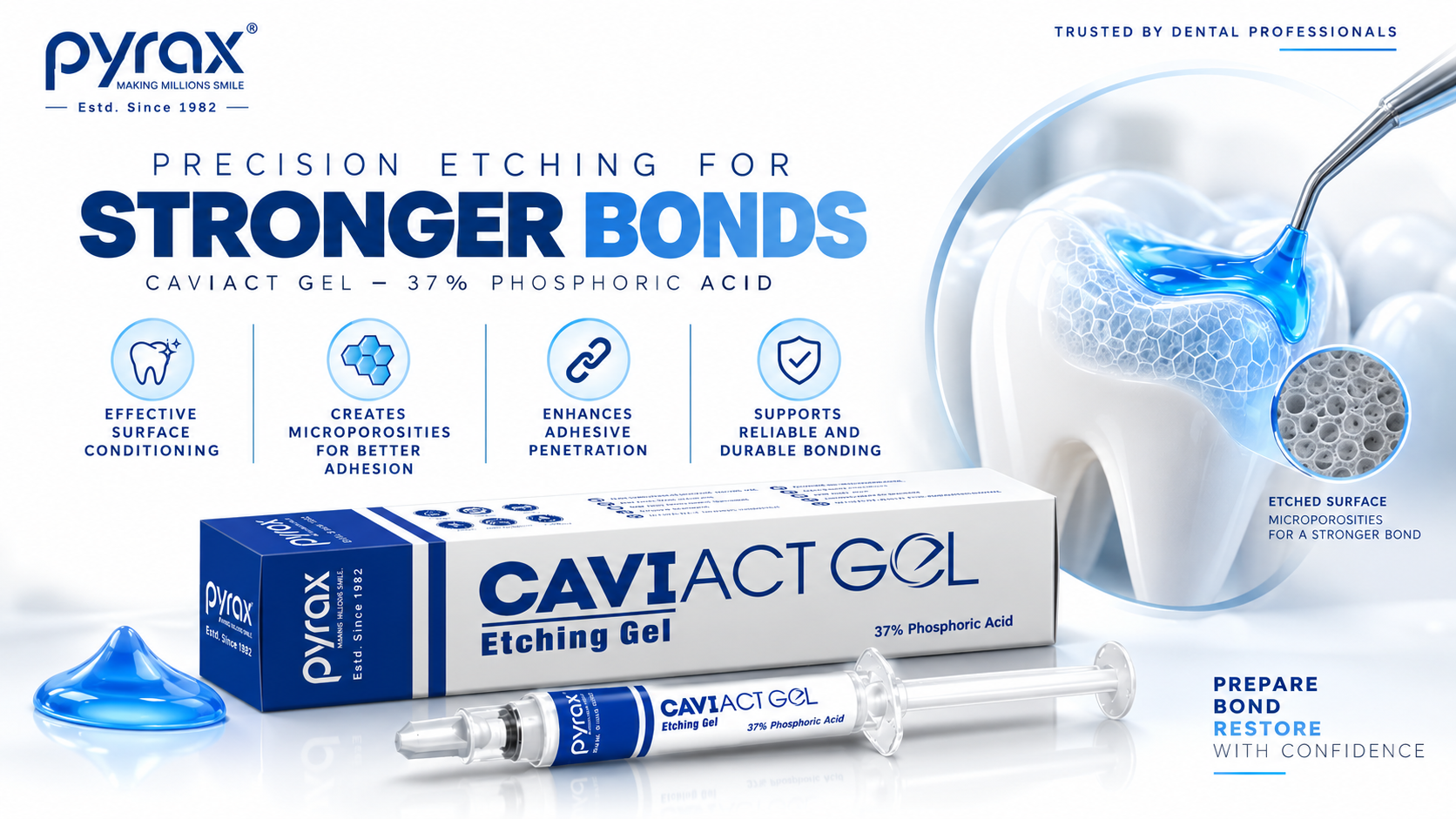
In today's progressive restorative and cosmetic dentistry, dental bonding has become an essential part. Whether your dentist is placing a composite restoration, repairing a dislodged tooth, or bonding some dental material, you need to have a bond between the tooth and the restoration.
One of the most common materials used during dental bonding procedures is dental etching gel. It is made from phosphoric acid and serves as a polish on enamel and sometimes dentin, depending on the type of adhesive used.
Through the removal of small surface irregularities on the teeth, the bonding material can more readily adhere to the surface. It has been known for many years that phosphoric acid conditioning can improve the bonding of a tooth to its enamel.
What Is Dental Etching Gel?
This is an acidic dental material used to prepare tooth surfaces before bonding procedures. Phosphoric acid makes up 30–40% of many enamel conditioning formulations. Depending on the manufacturer, various formulations and suggested applications might exist. Instead of using a liquid that flows freely, the dentist can more easily apply the gel to a particular area of the tooth thanks to its flowy consistency. Dental Etching Gel is eliminated, and the tooth surface is ready for the subsequent bonding step after the suggested duration of application.
How Does It Work?
The main objective of this priming gel is to modify the tooth's surface structure. Once the phosphoric acid is applied to enamel, it starts dissolving and produces tiny porosities. The resin can penetrate these microscopic flaws, forming a resin bond that mechanically attaches the tooth to the restorative material.
In short, this is used best for Surface Conditioning, Creating Microporosities for resin penetration, and Improved Bonding. Depending on the dentist's choice of etch-and-rinse, self-etch, or universal adhesive system, the bonding process will change.
Why Is It Important in Restorative Dentistry?
1. Improves Enamel Bonding
Phosphoric-acid treatment usually yields excellent results for enamel. An efficient substrate for resin-based bonding is produced by the microscopic surface pattern created during conditioning. This is one reason surface preparation remains an important part of many dentistry protocols.
2. Helps Create Micromechanical Retention
The tiny imperfections created during treatment enable resin to permeate the tooth's surface. A more robust bonding interface between the restorative material and the tooth is created by this mechanical interlocking.
3. Supports Restorative Procedures
Dental gel may be used as part of procedures involving resin-based restorative materials, including composite resin restorations and other bonding procedures. The specific indication should always follow the manufacturer's instructions and the dentist's clinical protocol.
4. Enables Selective Enamel Etching
With universal adhesives, dentists may choose a selective enamel etching approach.
This method applies phosphoric acid only to enamel without purposefully etching dentin. By limiting needless dentin surface preparation, this method can give enamel the advantages of phosphoric-acid conditioning.
Enamel vs. Dentin Surface Preparation
Depending on the product being used, the priming strategy should be modified. Collagen and other organic materials are present in dentin. Its sensitivity to excessive dentin surface treatment is probably higher. Dentin over-conditioning may affect resin infiltration and hybrid formation. They should focus on bonding each product with a suitable standard technique.
How Is the Tooth Surface Prepared?
The complete procedure of tooth surface conditioning from the start to the end depends on the products a dentist is using and what protocols he's following, but the standard protocol flows like this:
Step 1: Tooth Preparation: To begin the restoration procedure, we'll first prepare and clean the tooth.
Step 2: Isolation: For the isolation procedure, the rubber dam is created, and the tooth is isolated to protect it from any contamination of saliva, blood, and other fluids.
Step 3: Application of the Gel: This gel is carefully applied to the intended tooth surface according to the manufacturer's instructions.
Step 4: Controlled Surface Conditioning: The material remains on the surface for the specified period. Enamel treatment time should not be extended arbitrarily because the appropriate protocol depends on the substrate and adhesive system.
Shorter phosphoric conditioning times for enamel may provide bonding performance comparable to longer application times when using certain universal adhesives. According to new laboratory data. The manufacturer's instructions should still be considered during the procedure.
Step 5: Rinsing: After the standard time has passed, the etchant should be rinsed off completely from the surface.
Step 6: Adhesive Application: The appropriate primer, bonding agent, or universal adhesive is applied according to the selected bonding system.
Step 7: Restoration: Once the procedure is finished, the tooth is completely ready for further restorative procedures.
Etch-and-Rinse vs. Self-Etch Adhesives
Dental adhesive systems can broadly be divided into different approaches.
Etch-and-rinse systems use phosphoric acid as a separate conditioning step before rinsing and application of the bonding agent. Acidic monomers found in self-etch systems prime and condition the tooth surface at the same time. According to the product instructions, universal adhesives can frequently be used in a variety of modes, such as self-etch, etch-and-rinse, and selective enamel priming. The final decision completely depends on the tooth substrate, adhesive system, clinical situation, and the dentist's procedure they follow.
What Should Dentists Look for When Choosing a Surface Preparation Gel?
Dental professionals should always keep these points noted when selecting any surface preparation gel:
- · Phosphoric acid concentration
- · Appropriate gel consistency
- · Controlled application
- · Easy identification during application
- · Convenient dispensing system
- · Compatibility with the selected restorative adhesion protocol
- · Clear manufacturer instructions
- · Proper packaging and storage
- · Product quality and consistency
Always confirm whether the product used in the clinic is intended for the procedure and whether it is used according to the manufacturer's instructions. Making sure of this is highly important, even regarding the concentration of the acid present in the material.
Clinical Mistakes to Avoid
Correct technique is important when using phosphoric acid gel. Some common concerns include:
- · Applying the material to unintended surfaces
- · Leaving the conditioning agent in place longer than recommended
- · Inadequate rinsing
- · Contamination of the treated surface
- · Incorrect moisture control
- · Using a priming protocol that does not match the adhesive system
- · Ignoring manufacturer instructions
It has been noticed that contamination from fluids like saliva or blood can really hurt resin adhesion performance also, improper handling can lower bond strength, leading to poor bonding.
Frequently Asked Questions
What is dental etching gel used for?
This prepares enamel and tooth surfaces before applying adhesives. To facilitate resin penetration into the tooth and helps create irregularities on the enamel. Strong micromechanical retention is achieved by resin locking into the enamel thanks to the texture that Surface-preparation gel produces.
Is etching gel the same as a bonding agent?
No, this acid agent helps in priming the tooth surface, making it easier to carry forward any adhesive or restorative procedure, while a bonding agent helps in adhesion between the tooth structure and restorative material.
What acid is commonly used for tooth conditioning?
In the procedures commonly used gel is phosphoric acid; however, its concentration varies from brand to brand.
Can conditioning gel be used on dentin?
The adhesive system and clinical protocol are the determining factors. Dentin priming is considered in many of the etch and rinse system but on the other hand, application of phosphoric acid to enamel is purposely restricted under selective enamel etching.
How long should phosphoric acid gel remain on the tooth?
There is no single universal time for every product and clinical situation. Priming time should be determined by the specific adhesive system, tooth substrate, and manufacturer's instructions. Recent evidence indicates that shorter enamel etching periods may be effective with some universal adhesives.
Final Thoughts
A conditioning agent is a part of many restorative dentistry processes. By treating enamel—and sometimes dentin—it can create a surface that allows restorative materials to bond effectively.
Good adhesion depends on more than just the conditioning material. Right isolation, the time for application, proper rinsing, controlling moisture, choosing the appropriate restorative system, and using expert clinical skills all play a role in the result.
For dentists, selecting a suitable conditioning product and following the instructions from the manufacturer, like Pyrax Dental, is important for reliable restorative procedures.
Comments (0)